























Achieving stability in a volatile wood market: introducing reusable plastic pallets
Pallet timber is rising at its fastest rate and showing no signs of slowing. According to the latest European reports,...


Enhance supply chain efficiency, protect product quality, and drive sustainability with Tosca’s reusable packaging solutions and trusted partnership.

With in-house R&D and production, we’re at the forefront of reusable packaging and supply chain innovation.

Meet your sustainability goals by reducing C02 emissions, water waste and fossil fuel consumption.

Discover how Tosca’s expert partnership can optimise your supply chain.

See how Tosca’s pooling model streamlines your supply chain for seamless operations.
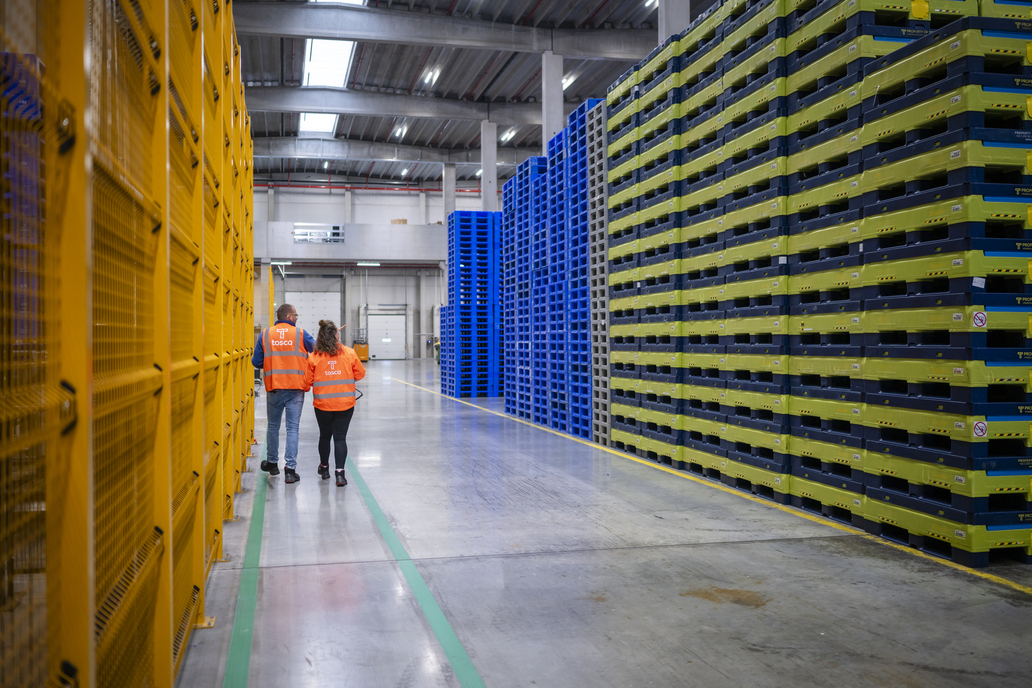
With Tosca’s pooling network, you’ll reduce waste, cut transport miles, and increase uptime.
A smarter, more sustainable way to move goods through your supply chain.

Learn about our 60+ year history, mission and values, and leadership team.

See our global network of service centers, get contact information, and directions.

Be at the forefront of sustainability with a talented team. Apply now.
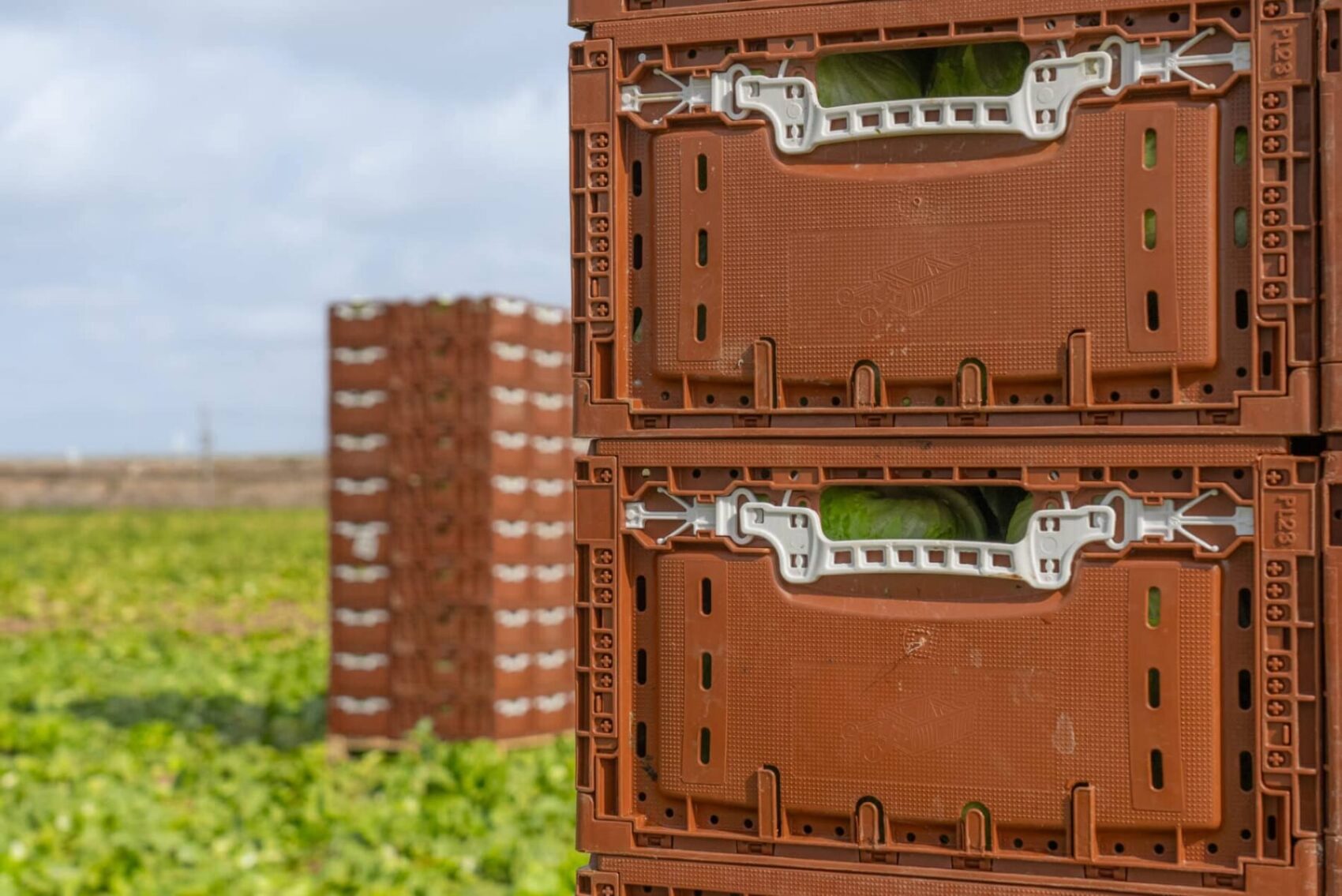
Explore how reusable plastic packaging supports compliance with new PPWR and EU packaging regulations.
Enhance supply chain efficiency, protect product quality, and drive sustainability with Tosca’s reusable packaging solutions and trusted partnership.
With in-house R&D and production, we’re at the forefront of reusable packaging and supply chain innovation.
Meet your sustainability goals by reducing C02 emissions, water waste and fossil fuel consumption.
Discover how Tosca’s expert partnership can optimise your supply chain.
See how Tosca’s pooling model streamlines your supply chain for seamless operations.
With Tosca’s pooling network, you’ll reduce waste, cut transport miles, and increase uptime.
A smarter, more sustainable way to move goods through your supply chain.
Learn about our 60+ year history, mission and values, and leadership team.
See our global network of service centers, get contact information, and directions.
Be at the forefront of sustainability with a talented team. Apply now.
Explore how reusable plastic packaging supports compliance with new PPWR and EU packaging regulations.
Supply chains across Europe are under sustained and simultaneous pressure. Cost volatility in materials and energy, ongoing labour shortages, rising waste and EPR fees, tightening regulation under PPWR, and growing ESG expectations are all reshaping how goods move through the supply chain. Packaging sits at the centre of this pressure.
In this environment, packaging decisions are no longer about unit price alone. The traditional single-use model depends on constant inputs – new materials, repeated manual handling and ongoing waste processing. As these inputs become more expensive, less predictable and more regulated, the limitations of single-use packaging are increasingly exposed.
This is why reusable packaging is gaining momentum now. Forward-looking businesses are treating packaging as strategic infrastructure rather than a consumable. Reusable systems respond to today’s challenges in combination – delivering resilience, operational stability, regulatory alignment and lower long-term cost – rather than addressing them in isolation.
When supply chains tighten, the weaknesses of disposable packaging become impossible to ignore.
As a result, single‑use packaging is becoming harder to justify operationally, financially and reputationally. What once looked cheap on a unit basis has become a volatile cost centre.
For years, the low unit price of single‑use packaging hid the real costs buried throughout the supply chain. Every trip requires new materials, new handling, new waste processing – repeating endlessly, with no scale benefit.
Reusable packaging flips this model.
Instead of managing recurring spend, companies invest in durability, predictability and control.
This shift is accelerating a much broader change: organisations are moving from unit pricing to evaluating packaging through lifecycle value.
Modern supply chains are built on standardisation – and single-use packaging struggles to keep up.
Cardboard, polystyrene and wood vary in size, strength and quality from batch to batch. This inconsistency creates friction at every stage:
Reusable packaging is engineered for uniformity. Controlled specifications, repeatable performance and predictable dimensions reduce variability and support automation. The result? Planning becomes easier. Throughput increases. Risk declines.
Pooling amplifies this benefit by extending standardisation across the network, not just within one company.
Regulation is no longer technology‑neutral — it is explicitly steering markets toward reuse.
Under the EU’s Packaging and Packaging Waste Regulation (PPWR), reusable solutions are prioritised, with mandatory reuse targets for key sectors. Durability, return logistics and design for reuse are becoming baseline requirements, not optional features.
Across Europe, Extended Producer Responsibility schemes are tightening. Single-use formats face higher fees, more reporting, and growing scrutiny about waste volumes and recyclability.
Reusable packaging aligns with this regulatory direction by design – durable, returnable, recyclable, trackable and circular. For multinational businesses, reuse also reduces exposure to regional variations in compliance, offering future‑proofing that disposable packaging cannot match.
In short: reusable packaging responds to regulation today and anticipates where it is heading tomorrow, driving future-proof businesses and supply chains.
Not all materials are suited to repeated use at scale. Plastic plays a critical role in reusable packaging systems because it combines durability, hygiene and consistency in a way few other materials can match — particularly in complex, high-throughput supply chains.
Across reusable assets such as crates, pallets, bulk bins, displays and trays, plastic enables reuse because it offers:
For food and beverage, pharmaceuticals and other sensitive categories, these characteristics are not optional. They are essential to building end-to-end reusable systems that are hygienic, efficient and scalable under real-world operating conditions.

The most important shift is conceptual. Reusable packaging is no longer viewed as a returnable container; it is increasingly recognised as supply chain infrastructure.
When delivered through pooling, reusable packaging becomes part of a fully managed network rather than an owned asset. Assets are tracked throughout their lifecycle, collected after use, professionally cleaned and inspected, and redeployed at scale to where they are needed next.
Businesses benefit from the performance of reusable packaging without taking on the operational complexity. Availability is assured, quality stays consistent, and packaging becomes a stable, reliable platform on which the rest of the supply chain can operate.
Because single-use packaging makes businesses increasingly vulnerable – to material and energy volatility, labour constraints, rising waste fees, regulatory pressure and evolving customer expectations.
Reusable packaging systems offer a more resilient alternative. They reduce exposure to volatile inputs, simplify operations, support automation and labour efficiency, and align with the regulatory direction of travel across Europe. When delivered through pooling, these benefits are achieved without adding asset complexity or capital burden.
As a system, reusable packaging delivers:
This is why so many businesses are making the shift now — not for incremental sustainability gains, but to build stronger, more resilient and future-ready supply chains.
Want to read more? Download our whitepaper to explore how reusable systems deliver measurable operational and regulatory value across European supply chains.