






















Norbev and Tosca: Driving Efficiency in Retail-Ready Beverage Supply Chains
Supplying high-volume beverages into UK retail requires precision, consistency and speed. For Norbev, meeting these demands meant ensuring packaging could...


Enhance supply chain efficiency, protect product quality, and drive sustainability with Tosca’s reusable packaging solutions and trusted partnership.

With in-house R&D and production, we’re at the forefront of reusable packaging and supply chain innovation.

Meet your sustainability goals by reducing C02 emissions, water waste and fossil fuel consumption.

Discover how Tosca’s expert partnership can optimise your supply chain.

See how Tosca’s pooling model streamlines your supply chain for seamless operations.
With Tosca’s pooling network, you’ll reduce waste, cut transport miles, and increase uptime.
A smarter, more sustainable way to move goods through your supply chain.

Learn about our 60+ year history, mission and values, and leadership team.

See our global network of service centers, get contact information, and directions.

Be at the forefront of sustainability with a talented team. Apply now.
Explore how reusable plastic packaging supports compliance with new PPWR and EU packaging regulations.
Enhance supply chain efficiency, protect product quality, and drive sustainability with Tosca’s reusable packaging solutions and trusted partnership.
With in-house R&D and production, we’re at the forefront of reusable packaging and supply chain innovation.
Meet your sustainability goals by reducing C02 emissions, water waste and fossil fuel consumption.
Discover how Tosca’s expert partnership can optimise your supply chain.
See how Tosca’s pooling model streamlines your supply chain for seamless operations.
With Tosca’s pooling network, you’ll reduce waste, cut transport miles, and increase uptime.
A smarter, more sustainable way to move goods through your supply chain.
Learn about our 60+ year history, mission and values, and leadership team.
See our global network of service centers, get contact information, and directions.
Be at the forefront of sustainability with a talented team. Apply now.
Explore how reusable plastic packaging supports compliance with new PPWR and EU packaging regulations.
As supply chains become more complex, interconnected and performance-driven, packaging decisions are no longer operational afterthoughts. They are infrastructure choices that directly influence efficiency, resilience, automation readiness and cost control – and fragmented packaging strategies are increasingly exposing risk.
One of the defining strengths of reusable packaging and pooling systems is their ability to operate across multiple stages of the supply chain, rather than being confined to a single use case. When designed as part of an integrated supply chain portfolio, reusable packaging assets can support different products, flows and environments – creating consistency in systems that can otherwise be fragmented.
For supply chain professionals under pressure to improve operational performance while managing risk and volatility, this adaptability makes reuse not only viable, but strategically compelling.
This is where reuse shifts from a tactical intervention to an integrated, system-level solution.
Modern supply chains rarely follow a straight line. Products move through multiple sites, partners and handling environments before reaching the end customer – and often flow back through reverse logistics, redistribution or reprocessing loops.
Single-use packaging struggles in this context. Designed for one-way movement, it introduces variability at each handover, forcing processes to adapt repeatedly and limiting opportunities for optimisation.
Reusable packaging is inherently better suited to this supply chain complexity. When managed as a pooled, closed-loop system, reusable assets move seamlessly across suppliers, manufacturers, distribution centres and retail environments without disrupting workflows. This consistency allows processes to be optimised end to end, rather than re-engineered at every touchpoint.
The result is not simply packaging reuse, but operational stability – a critical enabler for automation, labour efficiency and reliable service performance.
This system-level advantage becomes even stronger when reuse is applied to the specific demands of different supply-chain segments.
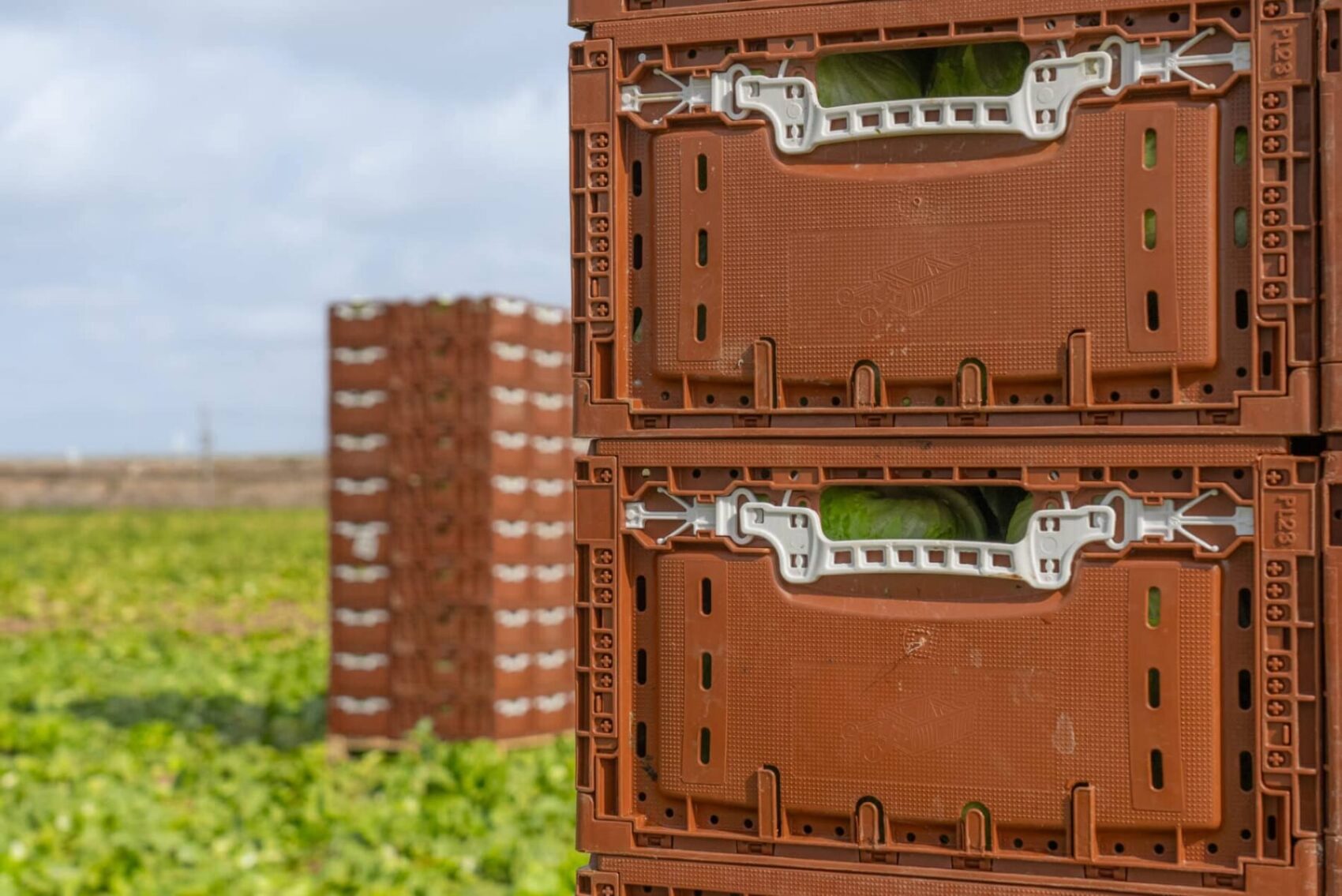
Reusable plastic crates are already well established in high-velocity categories such as fruit and vegetables, meat, dairy, bakery and prepared foods. In these environments, packaging performance directly impacts product quality, throughput speed and waste.
Ventilated crate designs support airflow and temperature control for perishable goods. Consistent dimensions enable efficient palletisation and seamless compatibility with automated handling systems. Shelf-ready formats reduce handling time in-store, improving on-shelf availability while lowering labour requirements.
From an operational perspective, reusable crates become reliable infrastructure around which processes can be standardised and continuously improved.
In business-to-business supply chains such as food ingredients, bulk liquids and food packaging, pallet consistency is foundational to both safety and automation performance.
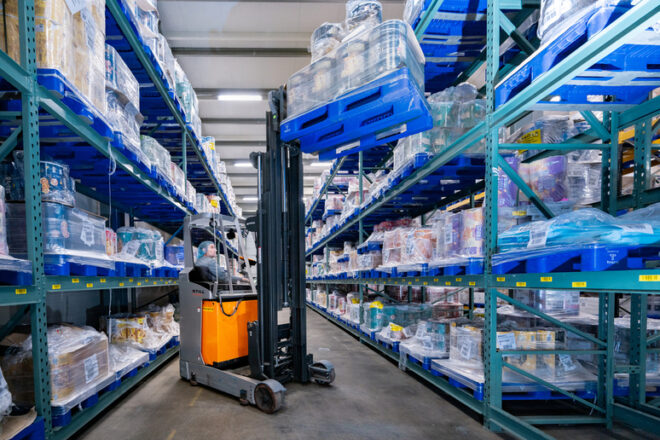
Unlike wooden pallets, plastic pallets offer predictable load-bearing performance, reduced contamination risk and significantly longer service life. These attributes make them particularly well suited to automated environments, where variability leads directly to downtime and maintenance issues.
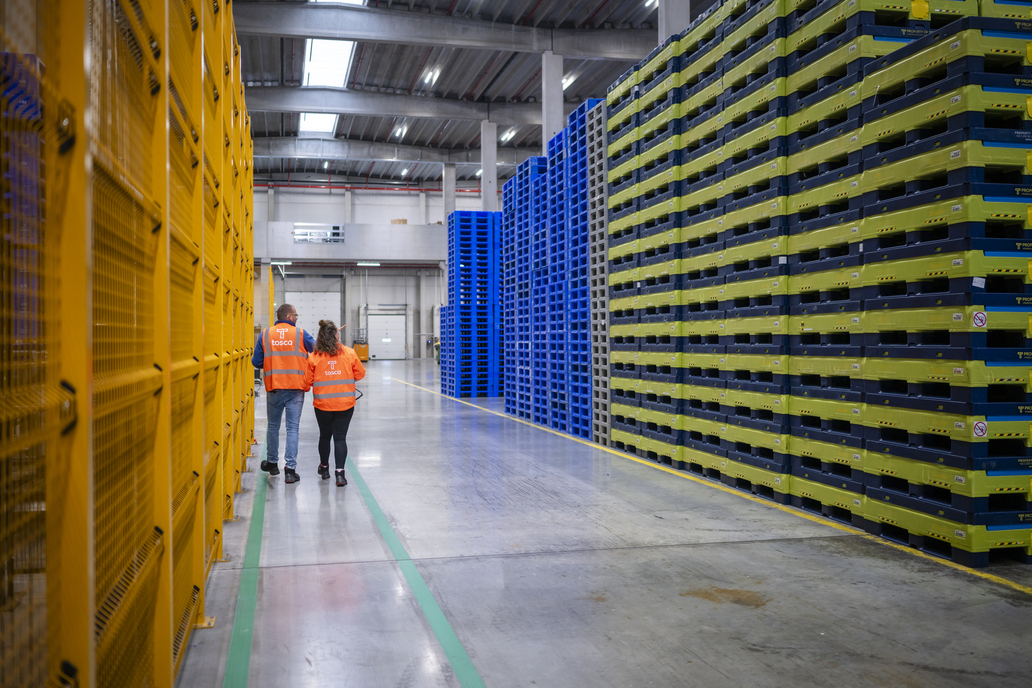
In beverage and FMCG distribution, half-pallet formats support efficient merchandising and store replenishment while staying compatible with automated handling systems throughout the network. Over time, fewer pallet-related incidents, reduced equipment wear and lower maintenance requirements contribute to greater operational stability.
Standardised plastic pallets provide a stable foundation for automation investments and enable closed-loop circulation across multiple trading partners.
Beyond cases and pallets, the same infrastructure logic extends to packaging used for bulk liquids or bulk ingredients. For liquids, ingredients and industrial goods, reusable bulk containers and IBCs offer a compelling combination of hygiene, durability and efficiency. These formats are particularly valuable in complex, regulated or high-volume supply chains where single-use solutions create cost, waste and inconsistency.
Foldable bulk containers reduce return transport volume, addressing one of the most persistent cost drivers in bulk logistics. Controlled cleaning and inspection processes reduce contamination risk, while robust construction supports repeated use in demanding environments.
In many cases, reusable bulk systems replace a patchwork of drums, liners or ad hoc containers with a more streamlined and auditable solution. This standardisation simplifies planning, reduces handling steps and improves traceability across multi-site operations.
For regulated products, consistency in intermediate packaging supports compliance, quality assurance and smoother collaboration between upstream and downstream partners — all while lowering total system cost.
When extended into retail-ready assets such as displays, dollies and beverage trays, reusable packaging continues to deliver value at the final stages of the supply chain – where operational efficiency and commercial performance meet.
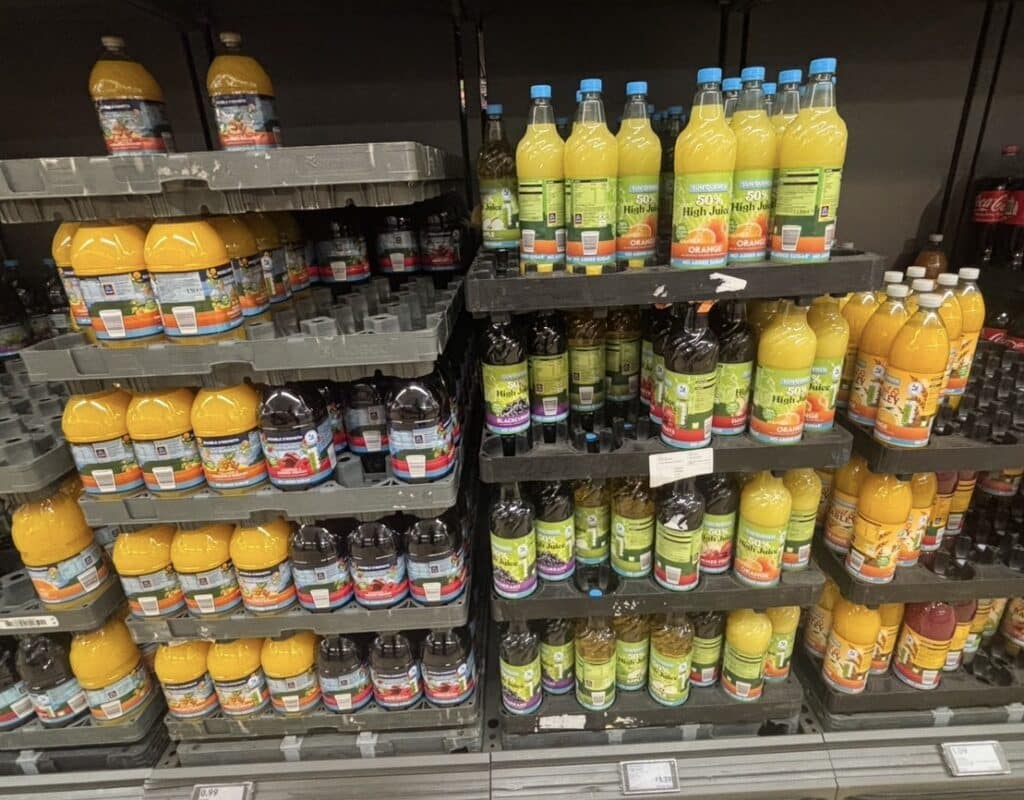
Reusable beverage trays play a critical role in store execution. Designed for direct-to-shelf replenishment, they support consistent presentation, faster restocking and better use of available shelf and floor space. By reducing handling and keeping products organised and accessible, retail-ready trays help improve on-shelf availability and create a cleaner, more appealing store environment that supports sales.
Reusable dollies improve flow and safety in distribution centres and stores, while reusable displays streamline merchandising and reduce time spent on manual setup. When designed as part of the same reusable ecosystem, these assets minimise friction between back-of-house logistics and front-of-house presentation.
This portfolio approach is critical. Treating reuse as a connected system – rather than a series of isolated packaging swaps – allows organisations to link transport, storage, handling and retail execution through a single operational model, delivering efficiency, consistency and commercial impact all the way to the shelf.
Taken together, reusable packaging systems function as end-to-end supply chain infrastructure. They reduce variability, support automation, improve hygiene and safety, and create a more predictable operating environment across multiple partners and geographies.
This is where specialist expertise matters. Designing, managing and scaling reuse across the supply chain requires more than durable assets — it requires orchestration, data, cleaning, pooling and lifecycle management.
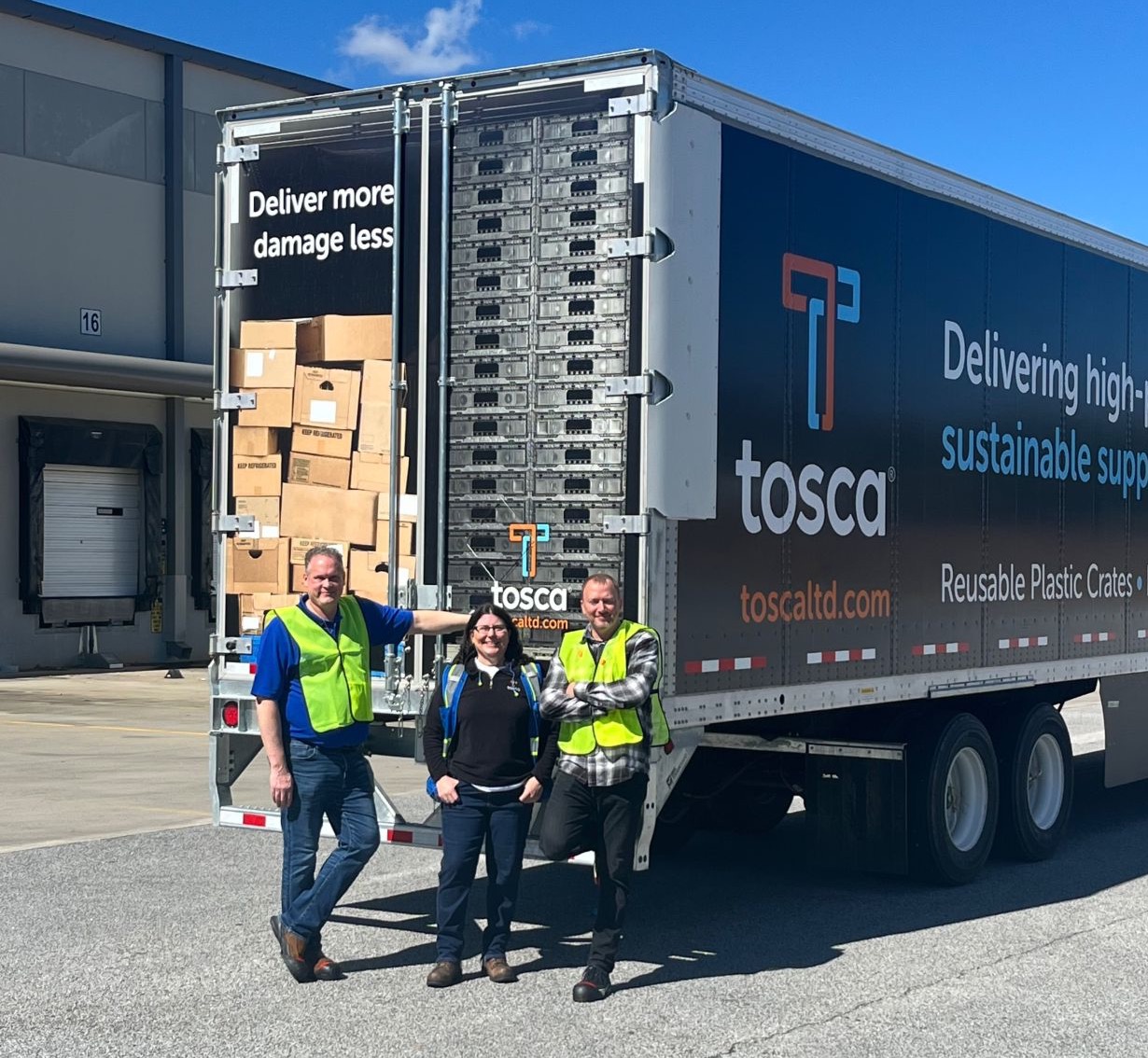
As an end-to-end reusable packaging specialist, Tosca helps organisations move beyond one-off pilots to fully integrated systems that deliver measurable operational and financial returns. By aligning reusable assets with real-world supply chain flows, Tosca enables reuse to function not as a sustainability initiative alone, but as a strategic enabler of performance, resilience and long-term value.
Download our whitepaper to explore why reusable packaging is becoming supply chain infrastructure – and why more businesses are making the shift now.