






















Norbev and Tosca: Driving Efficiency in Retail-Ready Beverage Supply Chains
Supplying high-volume beverages into UK retail requires precision, consistency and speed. For Norbev, meeting these demands meant ensuring packaging could...

Enhance supply chain efficiency, protect product quality, and drive sustainability with Tosca’s reusable packaging solutions and trusted partnership.

With in-house R&D and production, we’re at the forefront of reusable packaging and supply chain innovation.

Meet your sustainability goals by reducing C02 emissions, water waste and fossil fuel consumption.

Discover how Tosca’s expert partnership can optimise your supply chain.

See how Tosca’s pooling model streamlines your supply chain for seamless operations.
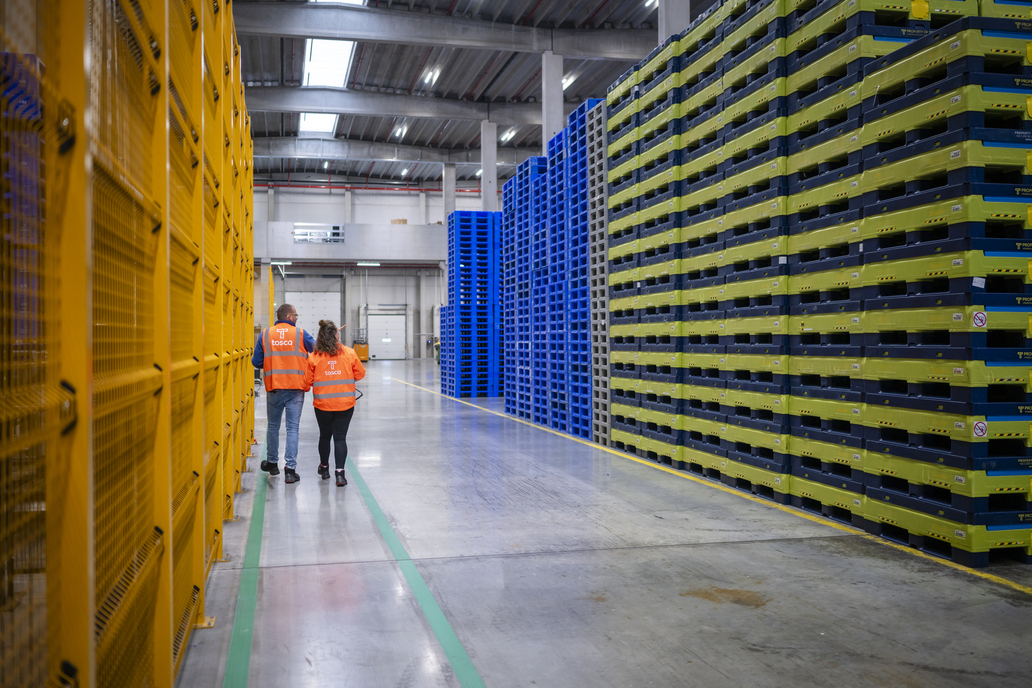
With Tosca’s pooling network, you’ll reduce waste, cut transport miles, and increase uptime.
A smarter, more sustainable way to move goods through your supply chain.

Learn about our 60+ year history, mission and values, and leadership team.

See our global network of service centers, get contact information, and directions.

Be at the forefront of sustainability with a talented team. Apply now.
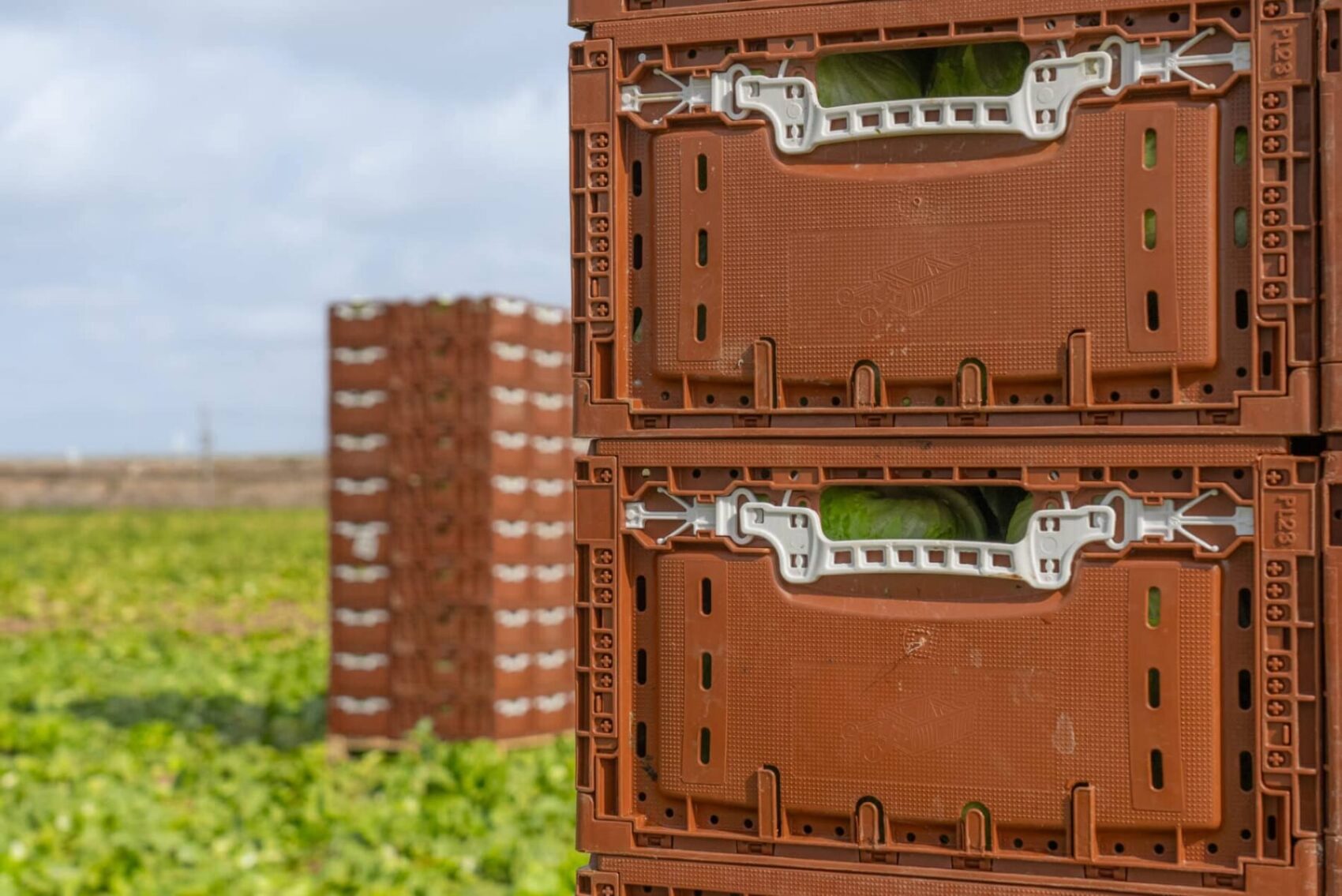
Explore how reusable plastic packaging supports compliance with new PPWR and EU packaging regulations.
Enhance supply chain efficiency, protect product quality, and drive sustainability with Tosca’s reusable packaging solutions and trusted partnership.
With in-house R&D and production, we’re at the forefront of reusable packaging and supply chain innovation.
Meet your sustainability goals by reducing C02 emissions, water waste and fossil fuel consumption.
Discover how Tosca’s expert partnership can optimise your supply chain.
See how Tosca’s pooling model streamlines your supply chain for seamless operations.
With Tosca’s pooling network, you’ll reduce waste, cut transport miles, and increase uptime.
A smarter, more sustainable way to move goods through your supply chain.
Learn about our 60+ year history, mission and values, and leadership team.
See our global network of service centers, get contact information, and directions.
Be at the forefront of sustainability with a talented team. Apply now.
Explore how reusable plastic packaging supports compliance with new PPWR and EU packaging regulations.
Published by Tosca, under Thought leadership

Transport efficiency is one of the most powerful ways to reduce supply chain costs. In many logistics operations, transport accounts for 10–25% of total supply chain spend, meaning even small improvements in vehicle utilisation can deliver significant financial savings.
While fuel prices and labour availability often dominate discussions about logistics costs, one factor is frequently overlooked as a strategy: packaging systems. Increasingly, companies are improving transport performance by replacing single-use packaging with reusable packaging operating within a pooling network.
Pooling combines durable, standardised packaging with a managed logistics system that keeps assets circulating continuously across the supply chain. The result is more efficient transport, fewer empty miles and lower overall packaging costs.
Pooling is a shared logistics system that enables companies to use durable, reusable transport packaging, such as reusable plastic crates, pallets and containers, within a managed network.
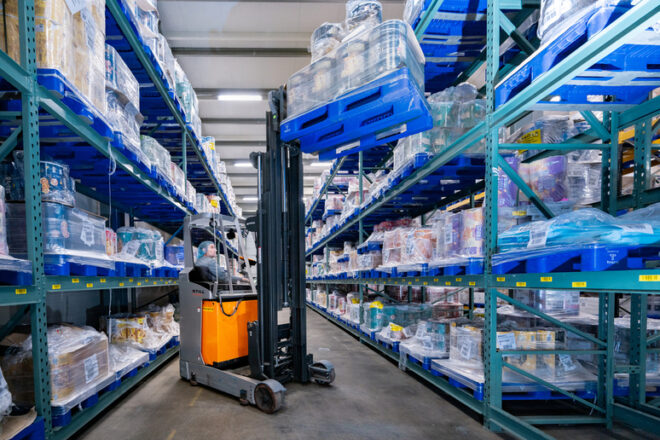
Instead of purchasing, transporting and discarding single-use packaging, reusable plastic assets circulate continuously across the supply chain. After use, they are collected, inspected, cleaned and redistributed for their next journey.
Tosca’s pooling service manages this entire process – delivering, collecting, repairing and washing reusable plastic crates, bins and pallets when and where they are needed. This allows companies to focus on their core operations while reusable packaging flows seamlessly through their supply chains.
By integrating reuse directly into logistics operations, pooling supports a circular supply chain model, while improving operational efficiency and reducing waste.
Reusable packaging delivers its greatest value when it operates within a pooling network. Together, they create structural efficiencies across transport operations.
Higher vehicle utilisation
Reusable plastic crates, pallets and containers are engineered with standardised footprints and rigid structures, allowing them to stack consistently and safely.
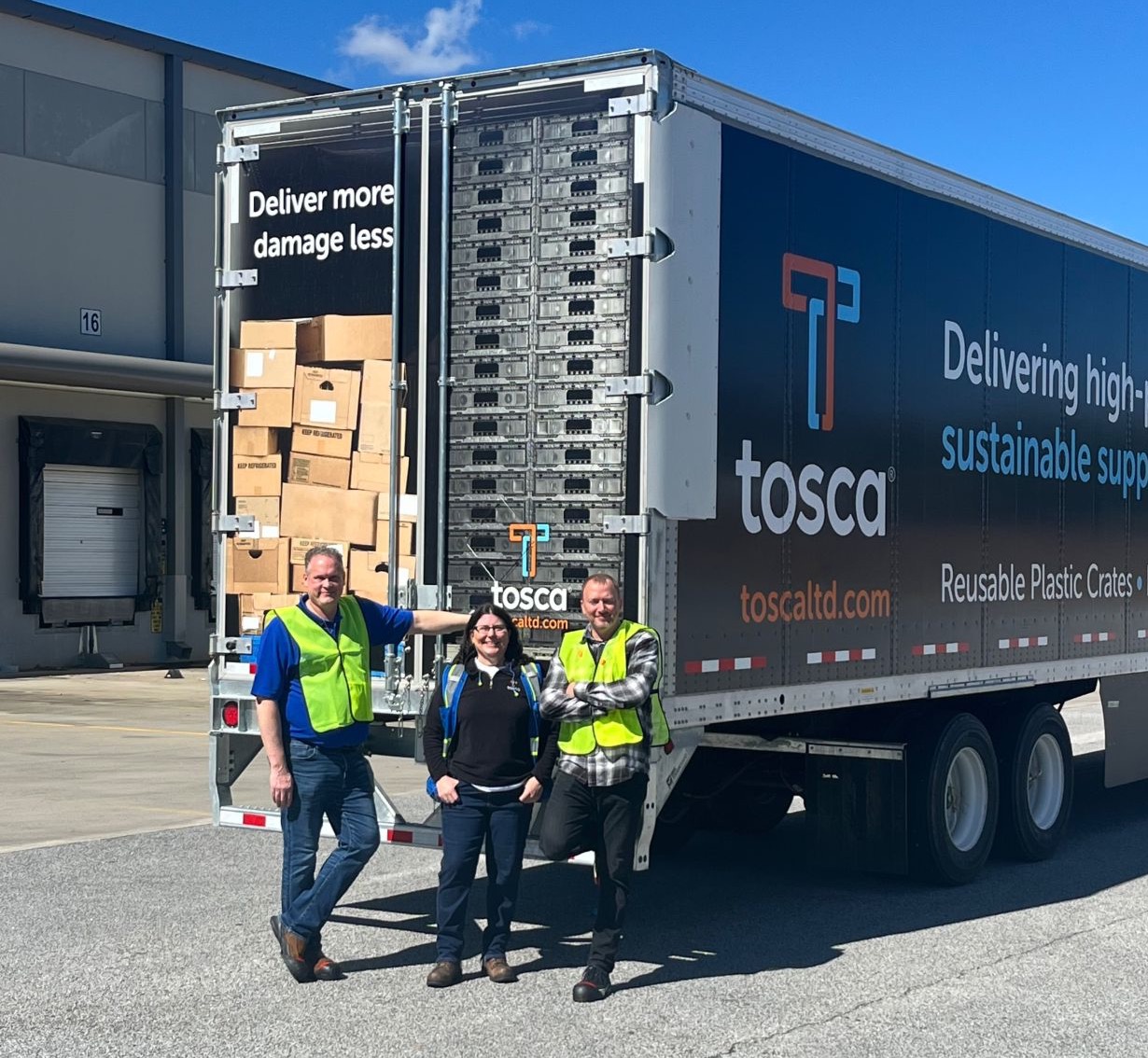
This predictability enables companies to optimise pallet configurations and vehicle loading patterns, ensuring trucks carry more products per trip and reducing the number of journeys required.
Reduced return transport volume
Many reusable transport containers are foldable, stackable or nestable, dramatically reducing their volume when empty.
This allows significantly more empty assets to be transported on return journeys, improving reverse logistics efficiency and lowering transport costs.
Fewer empty miles
Pooling networks operate through strategically located service centres and collection points, allowing assets to be washed and returned to nearby facilities rather than travelling long distances back to the original supplier.
Pooling operators can also consolidate collection routes across multiple customers, helping minimise empty transport miles.
Optimised logistics flows
Because assets circulate across multiple suppliers, manufacturers and retailers within the pooling network, transport flows become more predictable and efficient.
This shared system improves vehicle load factors and route optimisation, ensuring transport capacity is used as efficiently as possible.
When reusable packaging operates within a pooling network, the transport benefits quickly become measurable.
Tosca’s reusable plastic crates (RPCs), for example, are engineered to maximise vehicle utilisation and improve stacking performance across supply chains. Compared with many single-use alternatives, they can deliver:
These gains translate directly into fewer transport movements, lower fuel consumption and reduced logistics costs.
Pooling networks further amplify these efficiencies by ensuring assets remain in continuous circulation across suppliers, distribution centres and retailers, maximising asset value and improving transport network efficiency.
Pooling also eliminates many of the operational costs associated with managing packaging.
With Tosca’s pooling service, reusable assets are delivered, collected, cleaned and maintained as part of the service, removing the labour and administrative burden of managing packaging internally.
This collaborative approach shares resources across the supply chain, minimises operational risk and protects assets while reducing overall packaging costs.
Because reusable packaging is durable and designed for repeated use, it also provides better protection for goods during transport, helping reduce product damage and waste.
Foldable and stackable designs further improve efficiency by requiring less warehouse space for empty packaging, helping optimise storage and logistics operations.
One of the biggest advantages of reusable packaging pooling is that the efficiency benefits grow over time.
Every improved truckload reduces fuel use, transport costs and emissions. Across large supply chains, these efficiencies compound – delivering measurable operational and environmental benefits.
By combining durable reusable packaging with a professionally managed pooling network, companies can transform packaging from a disposable cost into a strategic driver of supply chain efficiency while supporting more circular logistics systems.
Find out more about the power of reusable packaging and pooling in our free whitepaper.