







Why packaging is eating your profit margin
Ask any supply chain executive where their biggest cost pressures are, and you’ll hear the same answers: labor, freight, and...

Protect product quality, gain efficiency, impact sustainability goals, and create bottom-line savings in one move.

Fewer out-of-stocks, higher product quality, greater sustainability impact.

Improve throughput, optimize storage, and reduce rejections.

Drive efficiency and enjoy faster, smoother DC operation.
Access solutions and perks that green your operation and save you money. From planning to implementation, we are with you every step of the way.
See how this leading grocer improved efficiency and sustainability by switching to Tosca RPCs. Learn the real-world impact and results in this customer success story.
Discover inspiring customer stories that highlight how our solutions have made a difference.

See why the world’s top retailers & suppliers partner with Tosca.

Reduce emissions, eliminate waste to landfills, and conserve energy.

Learn about our 60+ year history, mission and values, and leadership team.

Customize assets to meet your needs with our in-house R&D experts.

See our global network of service centers, get contact information, and directions.

Be at the forefront of sustainability with a talented team. Apply now.
Protect product quality, gain efficiency, impact sustainability goals, and create bottom-line savings in one move.
Fewer out-of-stocks, higher product quality, greater sustainability impact.
Improve throughput, optimize storage, and reduce rejections.
Drive efficiency and enjoy faster, smoother DC operation.
Access solutions and perks that green your operation and save you money. From planning to implementation, we are with you every step of the way.
See how this leading grocer improved efficiency and sustainability by switching to Tosca RPCs. Learn the real-world impact and results in this customer success story.
Discover inspiring customer stories that highlight how our solutions have made a difference.
See why the world’s top retailers & suppliers partner with Tosca.
Reduce emissions, eliminate waste to landfills, and conserve energy.
Learn about our 60+ year history, mission and values, and leadership team.
Customize assets to meet your needs with our in-house R&D experts.
See our global network of service centers, get contact information, and directions.
Be at the forefront of sustainability with a talented team. Apply now.
Published by hemasanghavi, under Customer stories
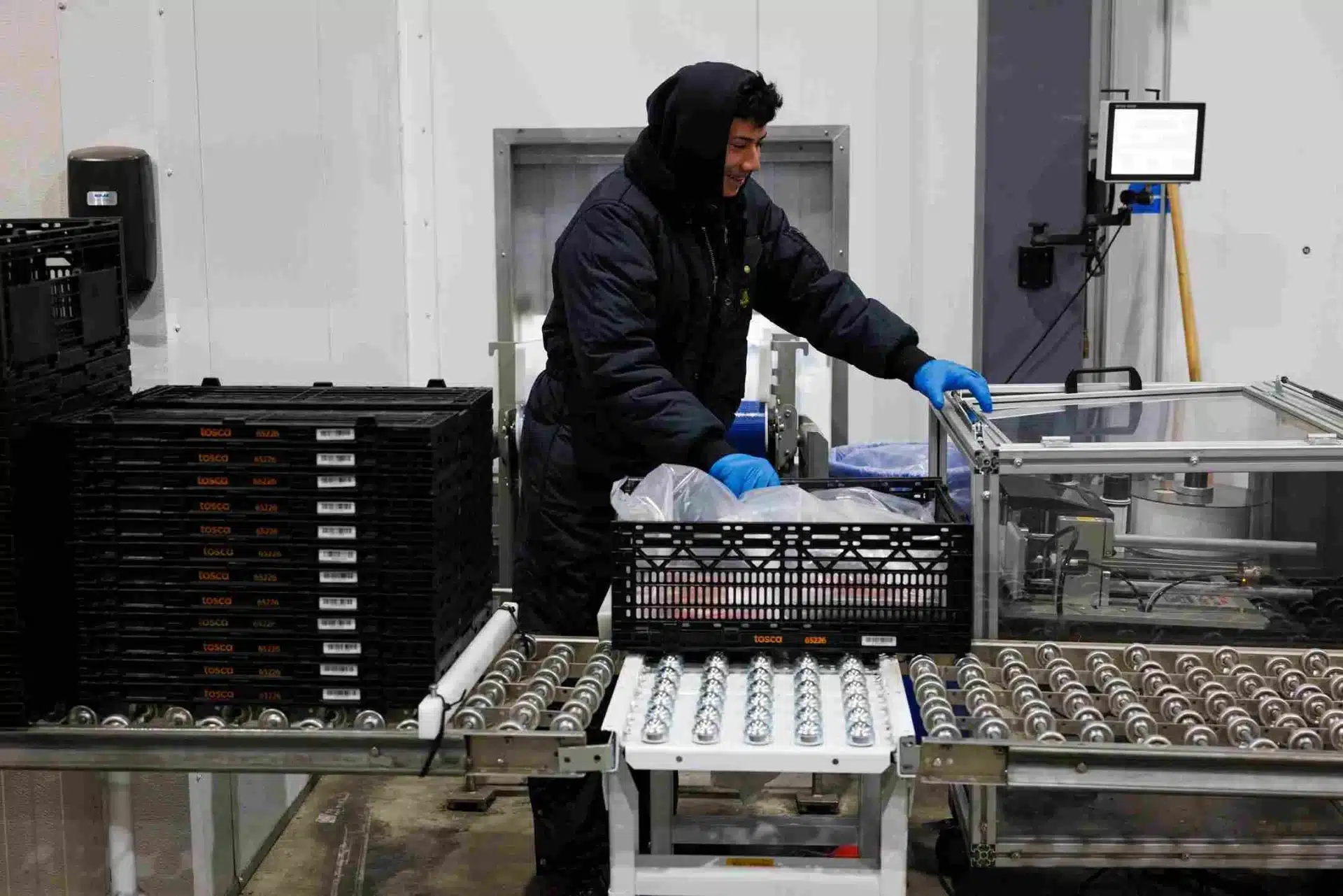
Brookshire Brothers replaced corrugated boxes with Tosca Reusable Packaging Containers (RPCs) and immediately saw major gains: throughput increased, labor on the line dropped from six people to one, and product protection dramatically improved. The switch eliminated downtime, waste, and box failures, creating a cleaner, faster, more reliable operation. Though met with some skepticism about the switch, the team now says they’ll “never go back” to corrugated boxes.
See how the Brookshire Brothers team transformed their meat operations, reduced headaches, and created “better days” with Tosca RPCs.
For Brookshire Brothers, quality is personal. The Texas-based grocer has built its reputation on being a grocer that knows their shoppers, cares about what goes in their cart, and takes pride in the food that ends up on the dinner table.
“Quality to me is what customers put in their buggy,” Randy Deal, Director of Perishables, shared. “I want the freshest, best-tasting product. I want the same items going into their buggies that I’d want to feed my family.”
But as Brookshire’s vertically integrated meat supply chain grew in volume, the packaging system that supported their meat operations wasn’t strong enough to meet that promise of quality – literally.
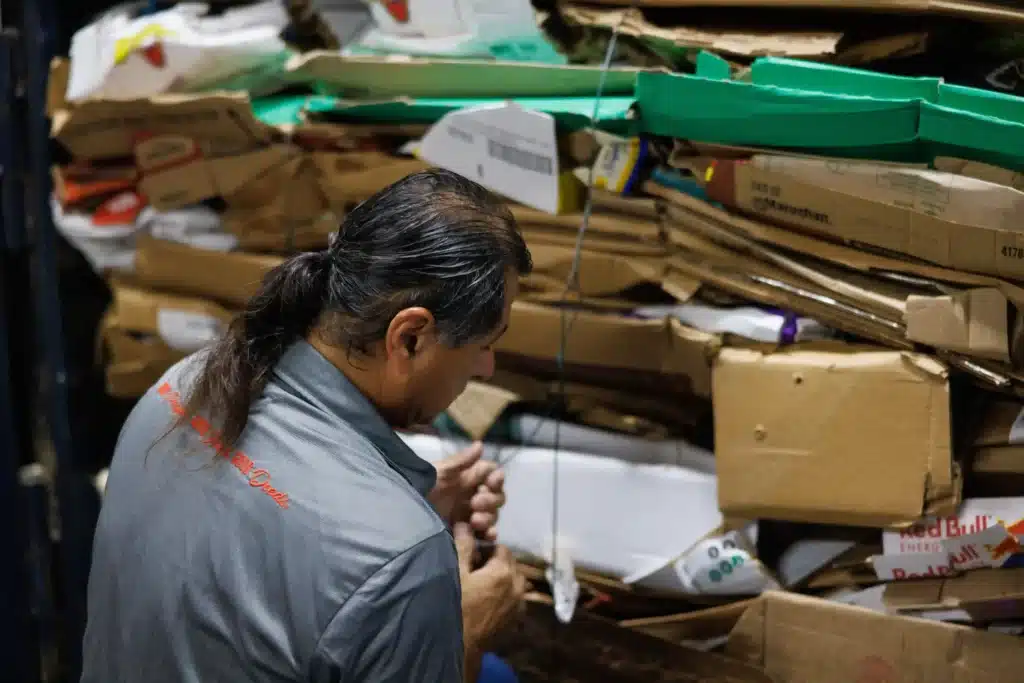
For years, Brookshire Brothers used corrugated boxes to move meat from production to the sales floor. It was the familiar way of doing things. But in a cold, wet, high-throughput environment, cardboard was quietly becoming a liability.
“Some of the problems that we had with the cardboard [were] the weight factor,” Kirk Looney, Maintenance Engineer, explained. “It was hard on the people having to pick up and load and lug the boxes… so much that [it] would create the issue where we would actually lose product.”
What should have been a smooth, predictable process turned into a cycle of interruptions. And as volumes grew, so did frustration.
The question shifted from “why change?” to “why are we putting up with this?”
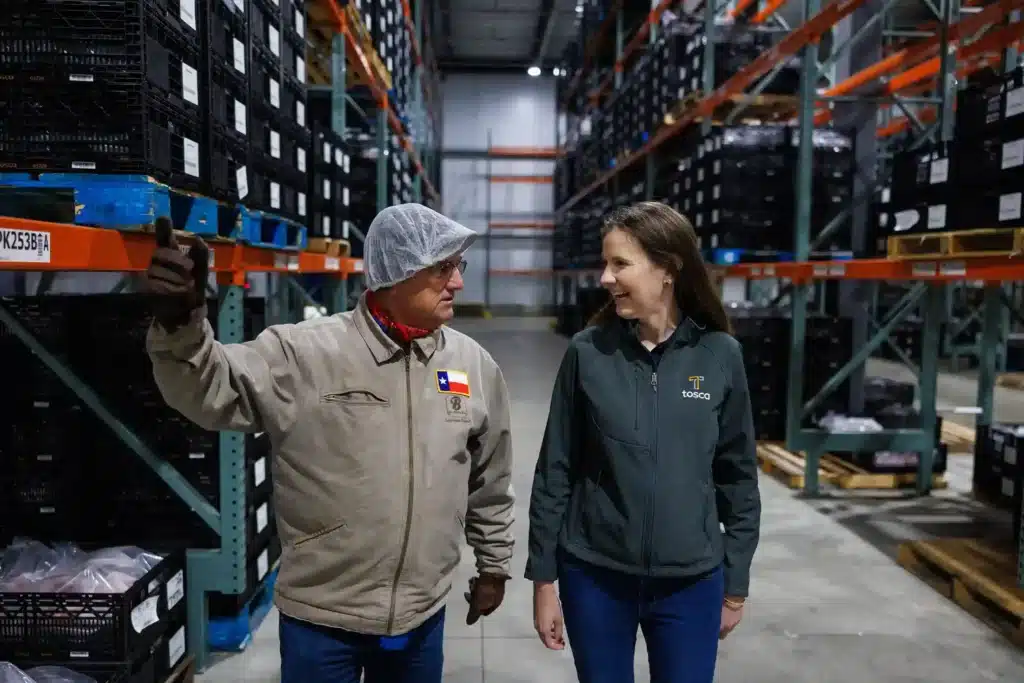
“When Tosca approached Brookshire, we really wanted to look through the lens of the customer,” Jamie Stapleton, National Accounts Manager, shared. “How can we reduce damage and eliminate packaging waste and really pass along that benefit to their customers?”
The solution had to perform in the freezer, on conveyors, in trucks, on the warehouse floor, and in restocking shelves—without adding complexity.
That meant solving for:
Though cost savings wasn’t the initial driver of the change, Brookshire was pleased to learn that RPCs would also save them money.
“They save us money over cardboard. The RPCs have been a financial benefit to Brookshire Brothers as well as labor savings. We are able to move much faster pace [with RPCS] than over corrugated. And we work with our vendors and partners everyday to lower the cost of operations so that we can pass that savings to our customers.”
The transition to Tosca RPCs started on the floor in a pilot, side by side with the Brookshire Brothers team. There was a bit of hesitancy at first.
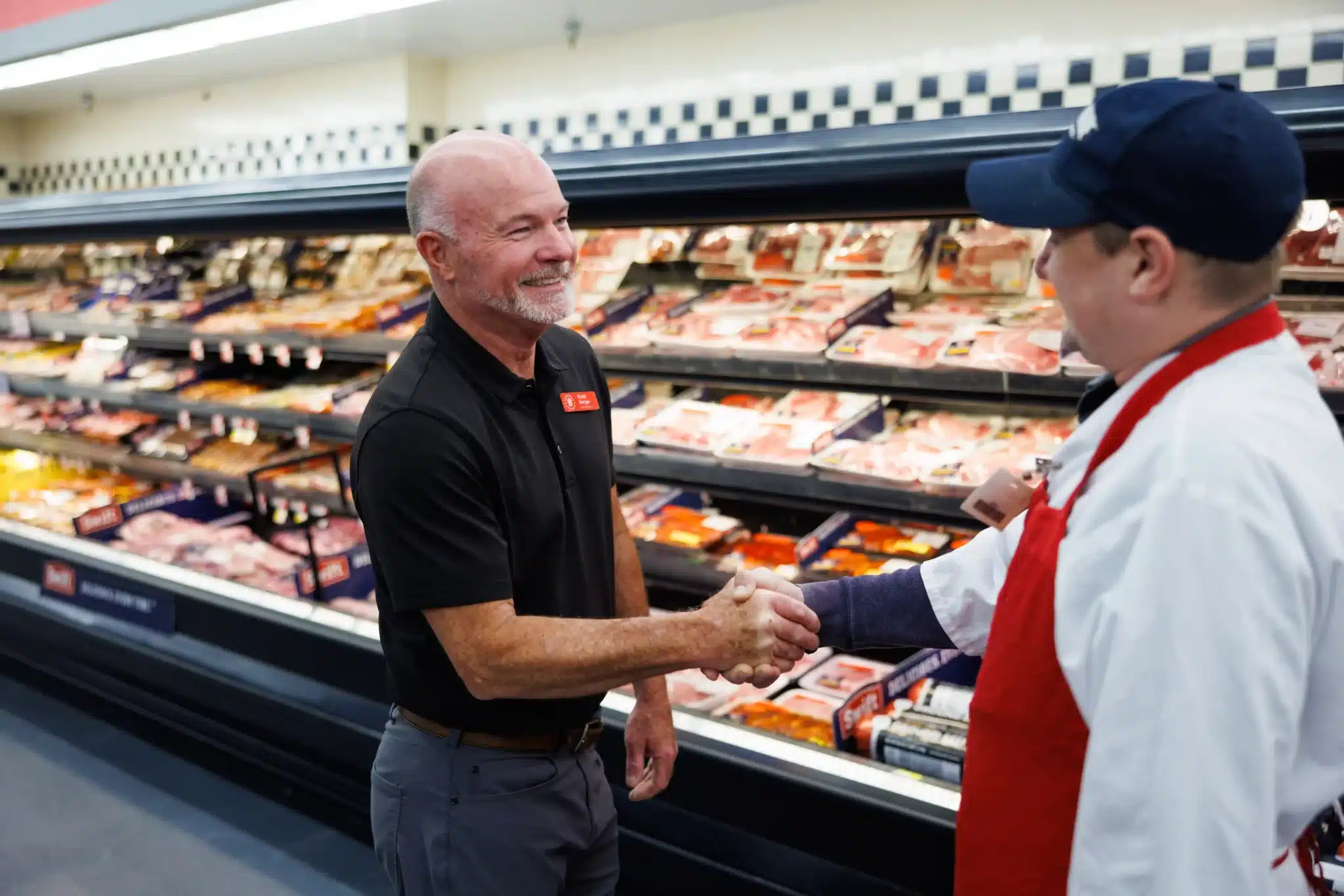
Scott Berger explained, “So anytime there’s a change, there’s a little pushback or a little hesitancy because your thought process [is] Well, if it’s not broke, why try and change something else? But during this process, we found out that, hey, it has been worked out better for us. Overall, as far as different cost saving events. So, it took me a little bit to get on board, but, now we’re on board.”
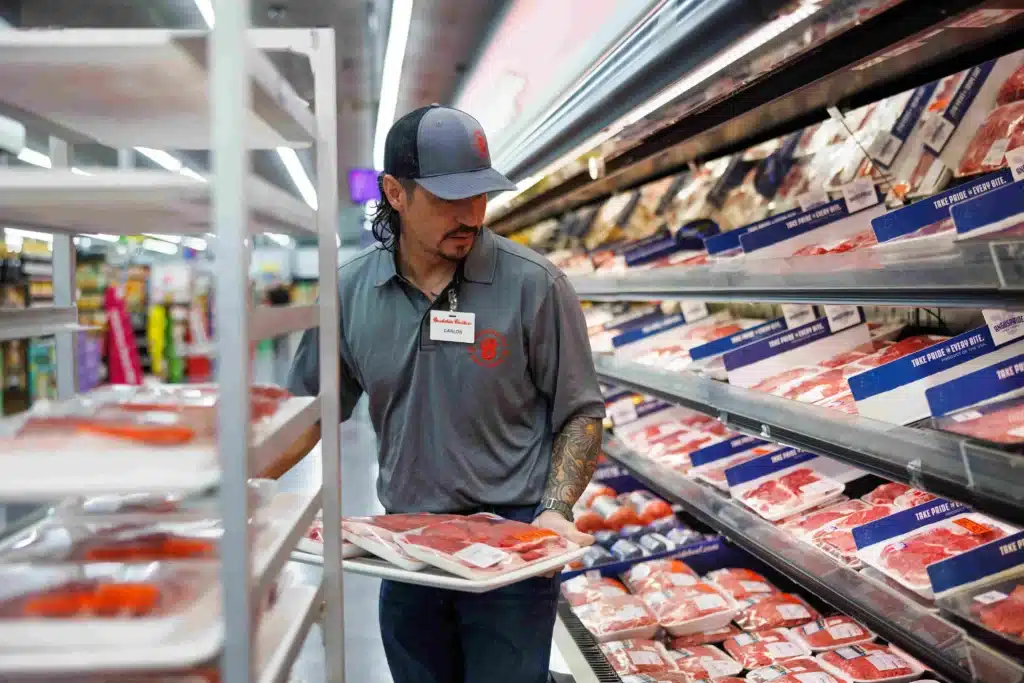
And the reaction from the back-room team was immediate.
“Since we’ve made the transition, production has increased because we don’t have the issues with the boxers,” Kenneth Hallman, Meat Plant Engineer said.
“We can just build the RPCs, fill ’em, and go. My guys in the back, they were just ecstatic because the boxers were so clumsy trying to operate ’em. It’s been a seamless transition.”
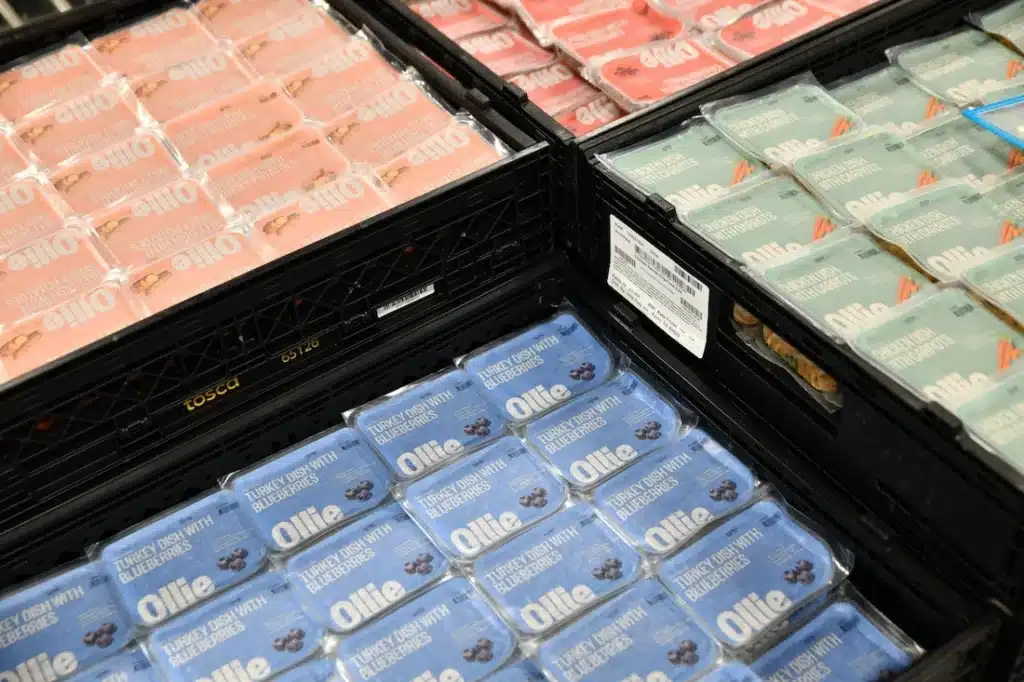
RPCs also changed how the operation looked and felt: neatly stacked containers on vented conveyors, clean lines of crates in the warehouse, legible labels visible at a glance.
“They stack neat in a truck. They look good just sitting in the warehouse,” a team member noted. “It gives an impressive look when you look through the warehouse, and you see the classic RPCs setting up with the labels on them that are easy to read.”
The impact of the change showed numerous other areas of daily operations almost immediately.
“It’s definitely a no-brainer,” Kirk Looney said. “We increased our throughput. My production members are happier. My maintenance team is much happier because we don’t deal with the breakdowns, from the dust, and the dirt.”
With corrugated, mis-formed boxes and breakdowns, energy was constantly pulled away from production. With RPCs, those interruptions disappeared.
One of the most striking changes was how few people it now took to keep the line moving.
“We’ve been able to make the transition from using six people in the back to do boxes to doing it sometimes with just one person on the line.”
That shift made space for the team to focus on the work that actually matters to shoppers.
“It gives us more time to be on the sales floor with the customers, helping out people as they’re up and down the meat counter,” Scott Berger explained. “It allows us to do packaging back in the back room a little bit easier… concentrate more on getting the product [ready] to sell versus having to do a cleanup process.”
Where cardboard would sag and tear, causing product damage, RPCs brought consistency.
“They protect the product better, and it’s easier to handle,” the team said. “These come in labeled and everything’s ready. Much easier, much better.”
And beyond cost, there’s an environmental impact. “You notice the difference in waste right away. With cardboard, we were hauling off loads of broken-down boxes. With RPCs, there’s almost nothing to throw away. It keeps the operation cleaner and cuts a lot of unnecessary waste.”
Looking back, the Brookshire Brothers team is clear: the move from corrugated to RPCs reshaped how their operation runs and how their teams feel at work.
“We started out using cardboard boxes because we didn’t know what we didn’t know,” Kirk reflected. “As we progressed, we found out there was a better way to do shipping… with reusable, lower-cost hard plastic containers from Tosca.”
Their verdict on the partnership is simple:
“Our partnership with Tosca is wonderful. It’s self-sufficient and easy to use. It works beautifully. Cardboard’s done. We’re through with that.”
And their message to anyone still relying on corrugated?
“Make the change. You won’t regret it. That’s all we want to do—make happy customers, and RPCs have definitely helped us have better days.”

Published on November 19, 2025
Updated on January 2, 2026