







How Tosca Is Powering Product-First Automation in Modern Manufacturing
Automation has moved from a “nice-to-have” to a manufacturing essential and at the center of successful automation is the product...

Protect product quality, gain efficiency, impact sustainability goals, and create bottom-line savings in one move.

Fewer out-of-stocks, higher product quality, greater sustainability impact.

Improve throughput, optimize storage, and reduce rejections.

Drive efficiency and enjoy faster, smoother DC operation.
Access solutions and perks that green your operation and save you money. From planning to implementation, we are with you every step of the way.
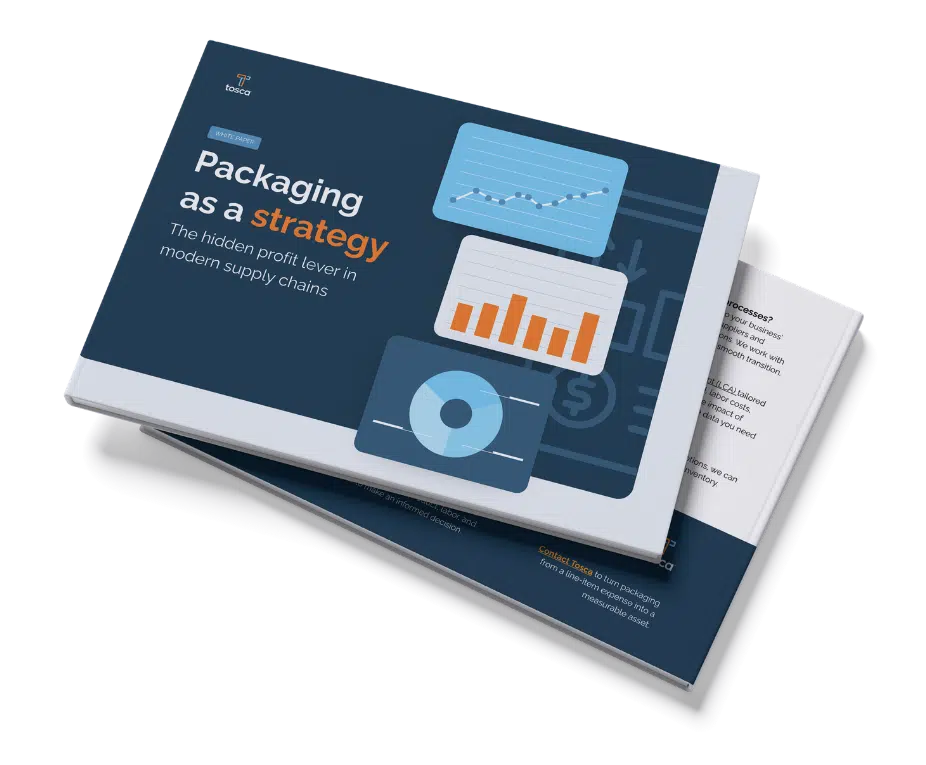
Learn how to transform transit packaging from a buried line-item expense into a high-impact strategic asset that drives measurable operational value.

Discover inspiring customer stories that highlight how our solutions have made a difference.

See why the world’s top retailers & suppliers partner with Tosca.

Reduce emissions, eliminate waste to landfills, and conserve energy.

Learn about our 60+ year history, mission and values, and leadership team.

Customize assets to meet your needs with our in-house R&D experts.

See our global network of service centers, get contact information, and directions.

Be at the forefront of sustainability with a talented team. Apply now.
Protect product quality, gain efficiency, impact sustainability goals, and create bottom-line savings in one move.
Fewer out-of-stocks, higher product quality, greater sustainability impact.
Improve throughput, optimize storage, and reduce rejections.
Drive efficiency and enjoy faster, smoother DC operation.
Access solutions and perks that green your operation and save you money. From planning to implementation, we are with you every step of the way.
Learn how to transform transit packaging from a buried line-item expense into a high-impact strategic asset that drives measurable operational value.
Discover inspiring customer stories that highlight how our solutions have made a difference.
See why the world’s top retailers & suppliers partner with Tosca.
Reduce emissions, eliminate waste to landfills, and conserve energy.
Learn about our 60+ year history, mission and values, and leadership team.
Customize assets to meet your needs with our in-house R&D experts.
See our global network of service centers, get contact information, and directions.
Be at the forefront of sustainability with a talented team. Apply now.
Published by hollymaher, under News

Fuel surcharges are back on the table. For anyone in food and grocery supply chain, that’s not a surprise. The question isn’t whether costs are rising. It’s how much runway operators actually have, and who ends up absorbing what they can’t pass along.
The honest answer: not much runway left.
Operations and logistics teams aren’t waiting around. The usual moves such as load optimization, shipment consolidation, and refined routing are already underway. Fuel surcharges from food distributors are landing quickly at the transportation level. The industry knows the drill.
The problem is that most of the traditional cost-absorption tools like pricing adjustments, supplier renegotiations, packaging and handling efficiencies, better asset utilization — have been in use for years. The pandemic, tariff cycles, and input cost inflation already forced operators to pull those levers. There isn’t a fresh set waiting.
Food producers and distributors are running on thin margins. When elevated fuel costs persist, the flexibility to shield customers from rising transportation costs shrinks fast.
| “Most of the traditional levers have already been pulled. There is little remaining flexibility to shield customers entirely from rising transportation costs, especially if elevated fuel prices persist.” — Shayne Murphy, VP of Operations, Tosca |
Not all product categories absorb cost increases the same way, and the sequence matters for grocers and food retailers.
Perishable goods sit at the top of the vulnerability stack. They move quickly through the supply chain with minimal inventory buffer, which means there’s no room to delay shipments or stage cost absorption over time. When fuel surcharges hit transportation, fresh categories reflect that increase fast, often within weeks.
Each handoff from origin to distribution to retail adds incremental cost. For perishables, those handoffs are frequent and compressed. The impact compounds quickly.
Packaged and processed goods have more insulation — contracts, stored inventory, hedging strategies. But those buffers are finite. Once they expire, higher transportation costs start surfacing in pricing. Proteins lag the longest, given the complexity of their production cycles.
| What this means in practice: Consumers see price increases in waves. Fresh items first, followed by packaged goods, followed by broader structural price movement across the market. |
There’s a common assumption that what consumers see at the pump is what the supply chain is already absorbing. That’s not how the timing works.
Even if crude prices moderate later in the year, diesel cost effects move through the system gradually. The fuel surcharges that transportation providers apply quickly don’t translate into retail price changes overnight. The downstream effects take months to fully materialize, depending on the product category and the structure of existing supply agreements.
That lag gives some operators a window, but it’s a window, not a solution. The full impact on food and consumer goods is still unfolding.
| “Consumers experience these impacts in waves — starting with fresh items, followed by packaged goods, and eventually broader structural price adjustments across the market.” — Holly Maher, VP of Sales, Tosca |
Fuel cost pressure isn’t a new problem but the margin environment operators are navigating today is thinner than it’s been in years. The compounding effect of tariff cycles, pandemic-era disruptions, and input cost inflation has left the industry with fewer reserves to draw on.
For supply chain leaders, the focus is shifting toward resilience, infrastructure investments, smarter asset utilization, and packaging and handling efficiencies that reduce cost structurally rather than reactively.
The operations that come out of this cycle in the best position will be the ones that used the disruption to build flexibility into the network, not just respond to the latest cost spike.
Published on May 6, 2026
Updated on July 7, 2026

VP of Commercial Sales / Tosca