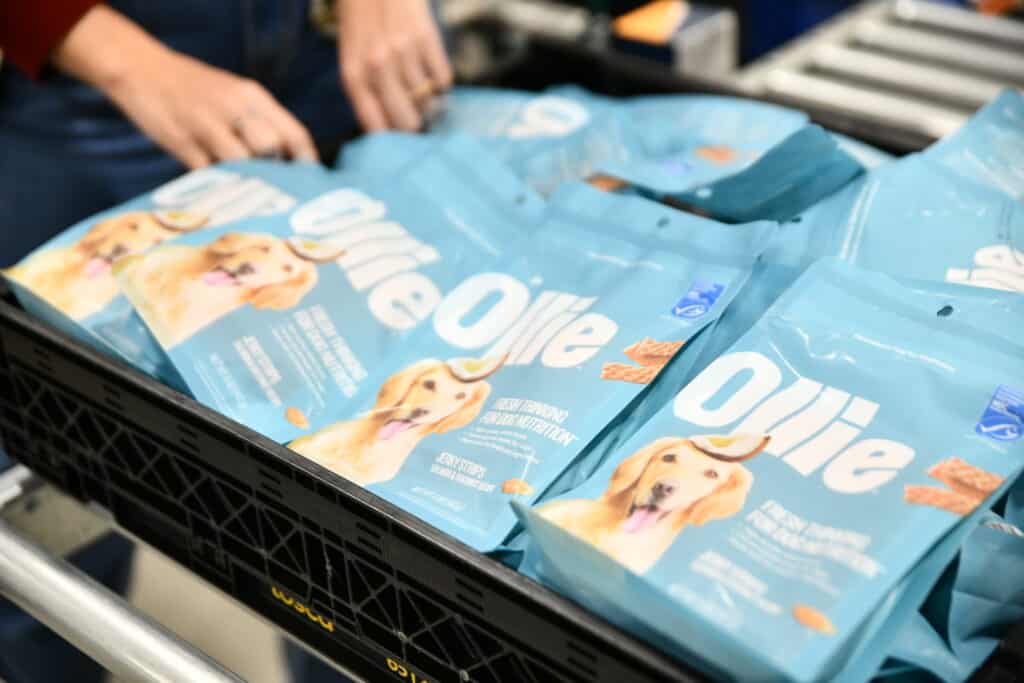





Ollie improved product protection and reduced packaging waste with Tosca reusable containers
ATLANTA, GA: As demand for fresh, human-grade pet food continues to grow, brands are facing new operational challenges. Products must...

Protect product quality, gain efficiency, impact sustainability goals, and create bottom-line savings in one move.

Fewer out-of-stocks, higher product quality, greater sustainability impact.

Improve throughput, optimize storage, and reduce rejections.

Drive efficiency and enjoy faster, smoother DC operation.
Access solutions and perks that green your operation and save you money. From planning to implementation, we are with you every step of the way.
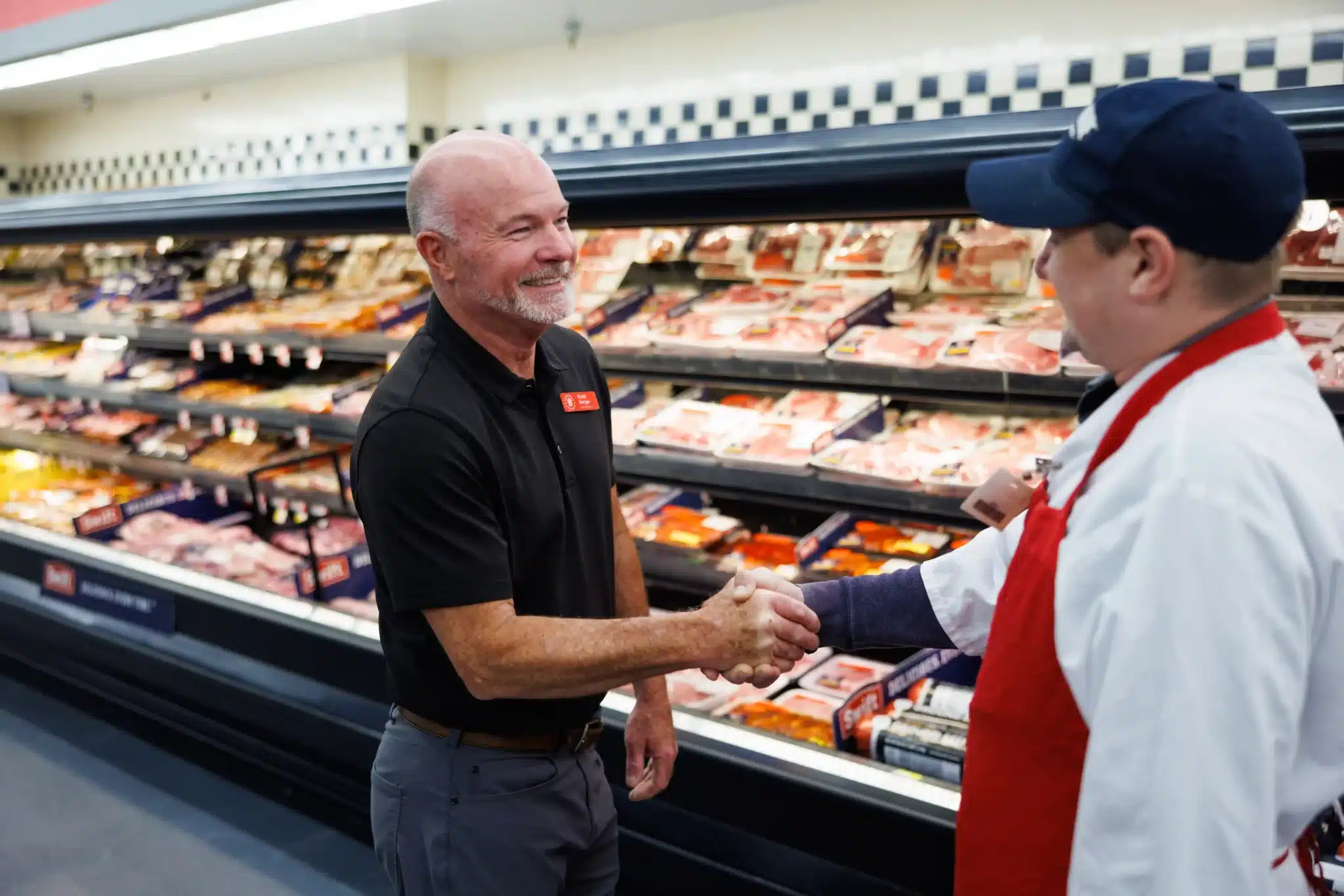
See how this leading grocer improved efficiency and sustainability by switching to Tosca RPCs. Learn the real-world impact and results in this customer success story.
Discover inspiring customer stories that highlight how our solutions have made a difference.

See why the world’s top retailers & suppliers partner with Tosca.

Reduce emissions, eliminate waste to landfills, and conserve energy.

Learn about our 60+ year history, mission and values, and leadership team.

Customize assets to meet your needs with our in-house R&D experts.

See our global network of service centers, get contact information, and directions.

Be at the forefront of sustainability with a talented team. Apply now.
Protect product quality, gain efficiency, impact sustainability goals, and create bottom-line savings in one move.
Fewer out-of-stocks, higher product quality, greater sustainability impact.
Improve throughput, optimize storage, and reduce rejections.
Drive efficiency and enjoy faster, smoother DC operation.
Access solutions and perks that green your operation and save you money. From planning to implementation, we are with you every step of the way.
See how this leading grocer improved efficiency and sustainability by switching to Tosca RPCs. Learn the real-world impact and results in this customer success story.
Discover inspiring customer stories that highlight how our solutions have made a difference.
See why the world’s top retailers & suppliers partner with Tosca.
Reduce emissions, eliminate waste to landfills, and conserve energy.
Learn about our 60+ year history, mission and values, and leadership team.
Customize assets to meet your needs with our in-house R&D experts.
See our global network of service centers, get contact information, and directions.
Be at the forefront of sustainability with a talented team. Apply now.
Published by hemasanghavi, under Customer stories

Scaling a fast-growing food brand requires more than increasing production capacity. Every part of the supply chain from fulfillment operations to packaging systems must be able to keep up.
For Ollie, a premium pet food brand known for its fresh, human-grade meals, that meant taking a closer look at an often overlooked part of the operation: packaging.
As demand for fresh pet food grew, Ollie’s fulfillment centers relied heavily on corrugated master cases to move product through the supply chain. While common across the food industry, the system created mounting challenges. Large volumes of single-use packaging generated waste, added labor for workers who had to break down boxes throughout the day, and introduced inefficiencies in fast-moving fulfillment environments.
Instead of simply scaling the existing system, Ollie asked a different question: Could packaging itself be redesigned to support growth more efficiently?
The answer led the company to rethink how product moves through its supply chain replacing corrugated boxes with reusable containers designed for durability, airflow, and operational simplicity. The result was a packaging system that reduced waste, streamlined handling, and helped support Ollie’s rapid expansion.
As the company expanded its operations, its team reviewed multiple aspects of its supply chain to ensure processes could support growth. Packaging quickly emerged as an area worth reconsidering.
Fresh dog food arrives from kitchens, is unpacked, palletized, and moved into freezers. During busy shifts, thousands of corrugated boxes had to be opened, handled, and discarded.
The result was constant cleanup and operational friction.
“We were using so much corrugated in our fulfillment centers for our fresh product,” explained Ed Brockhoff, Director of Supply Chain & Manufacturing at Ollie. “Everything came in a master case, and the amount of tree fiber we were going through was not in line with our sustainability goals.”

Moisture can weaken cardboard structures, causing boxes to sag or collapse. In freezer environments, limited airflow can slow temperature stabilization. And single-use designs require continuous purchasing, disposal, and recycling.
At Ollie, the team identified four major constraints created by corrugated packaging:
Individually, these challenges may seem manageable. Together, they can create measurable operational drag.
Ollie explored a fundamentally different packaging model. The company transitioned to Tosca’s reusable plastic containers (RPCs).
Unlike single-use corrugated boxes, RPCs are designed for repeated circulation across the supply chain. Containers are cleaned, returned, and redeployed hundreds of times. For Ollie, the shift addressed multiple operational challenges simultaneously.

Since the containers are ventilated, it allowed cold air to circulate freely around products, helping frozen items reach temperature faster.
“RPCs are very useful for the frozen product because they allow for circulation of cold air in the freezers, getting packs frozen more quickly,” Brockhoff explained.
Because containers arrive ready to use, workers no longer need to break the packaging down after use. Operations become simpler and more predictable.
Packaging sustainability is often framed around recyclability. But many supply chain leaders are increasingly recognizing that reusability changes the equation entirely.
Since switching to reusable containers, the company has saved the equivalent of 9,210 trees previously used to produce corrugated packaging.
Reducing cardboard consumption also reduces water use associated with manufacturing and recycling fiber packaging. These benefits compound over time as containers remain in circulation across hundreds of trips.

The benefits of reusable containers extended well beyond sustainability. Rigid container structures maintain their shape even in moisture-heavy environments where cardboard can weaken. This helps prevent pallet collapses and product spills.
Stable stacking also improves workplace safety and reduces cleanup events. RPCs are designed to balance durability with ergonomic handling, allowing workers to move product efficiently without unnecessary strain.
Ollie also simplified its packaging system by standardizing container size. Rather than managing multiple corrugated box sizes, the company selected a single reusable container that could accommodate all product SKUs.
This consistency streamlined storage, handling, and packing throughout the operation.

For many companies, transitioning packaging systems can feel daunting. Changes affect suppliers, logistics workflows, and warehouse processes.
But Ollie’s experience shows that the right partner can make the process straightforward.
“Tosca works really closely with our upstream vendors. They held their hands through the onboarding process,” Brockhoff explained. “Pretty quickly our vendors liked the approach because it was very simple for them.”
Tosca manages container cleaning, logistics, and ordering behind the scenes, allowing operators to focus on core production activities. From the operations team’s perspective, the system runs seamlessly.
For many companies, packaging remains an overlooked part of supply chain strategy.
Ollie’s experience demonstrates how a relatively small operational decision can deliver wide-reaching impact. By replacing corrugated boxes with reusable containers, the company created a packaging system better aligned with the demands of modern food supply chains.
Video Transcript
[00:00:00] Ed Brockhoff, Director, Supply Chain and Manufacturing, Ollie: At Ollie, we’re taking a fresh approach to pet nutrition. We’re trying to take that same approach to the business to the way that we operate. Part of that is moving away from that old model of corrugate master cases to something new and innovative.
[00:00:17] Michael Davis, Customer Success Manager, Tosca: Ed’s big concern when he contacted us was to improve the quality of the product that they received from their manufacturer.
They had experienced crushed boxes and tipped over loads, and they wanted to make an improvement, and they also wanted to improve the throughput through their facility/
[00:00:32] Ed Brockhoff: We were bringing a lot of frozen product in the old fashioned corrugate boxes, which as you can imagine, involves a lot of breaking down at the end of the shift.
So we’re trying to look at something that was gonna be more sustain. For us as we grew and it was also gonna be easier and safer in our facilities for our staff. And I thought it would be a, a difficult transition and it wasn’t. It was a really easy transition.
Tosca’s not only willing to work directly with the upstream vendors, I think they actually really enjoy it. They know how important our partnership is with our vendors. And they’re very respectful of that, and they work hand in hand with those vendors to, to bring them on board this, this new process.
[00:01:18] Eric Dougherty, General Manager ILFC, Ollie: Once the product was introduced, the transition was pretty seamless for the most part.
With corrugated, they had to break them down. They had to stack them up. It’s very awkward to haul around like stacks of them with these so they can move them around without any issues whatsoever, carry them distances and things without having any kind of strain or any kind of risk of, of possible injury.
One of the great advantages to Tosca is that they are open on, on the outside, so it allows for air flow. So when we put them in our freezer, it helps ensure that they stay cold by having the freezing air blowing through them and then maintain temperature.
[00:01:54] Ed Brockhoff: We have a, a big focus on sustainability at Ollie, one thing we’re trying to do is, is reduce our use of packaging. One really cool thing with Tosca is that they’re very open to suggestions and to opportunities for further partnership. So we’ve actually started up a, a project with one of our packaging vendors and Tosca quite recently, where we’re exploring can we design a new RPC for a particular purpose for a particular product pet food space.
Especially for high-quality dog food is growing exponentially, and the needs of our customers and customers in the general industry are growing and are also changing. And part of that is not only high-quality dog food that’s gonna give you the dog the happiest and healthiest of lives, it’s also ensuring that the company that you’re partnering with is looking out for the environment, looking out for the planet, and for the future of everyone — dogs and humans included.
Published on March 31, 2026
Updated on April 2, 2026