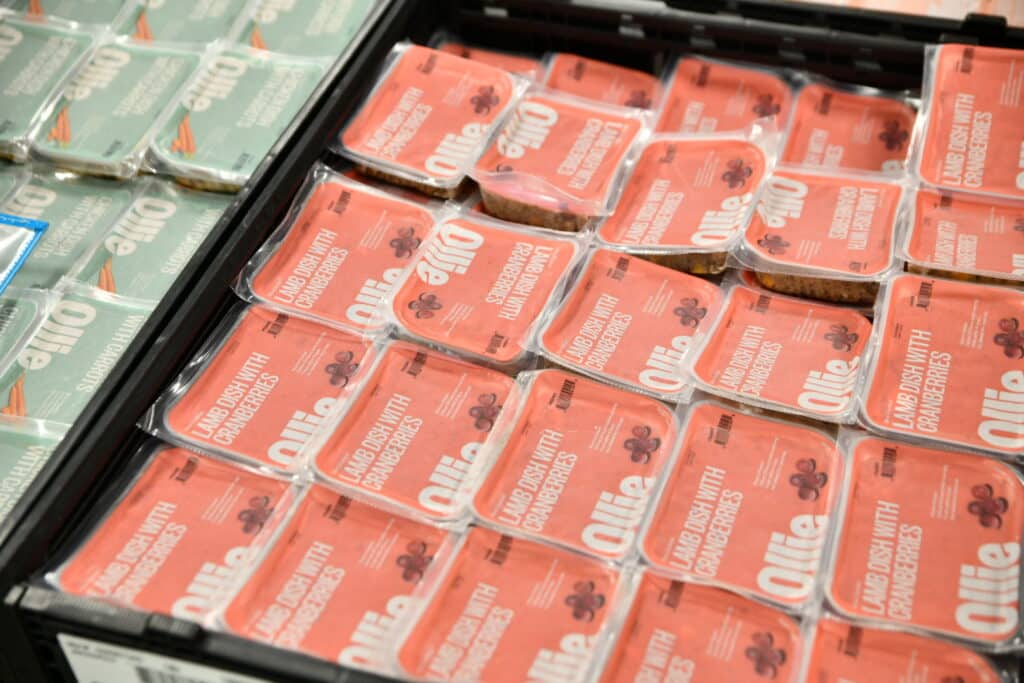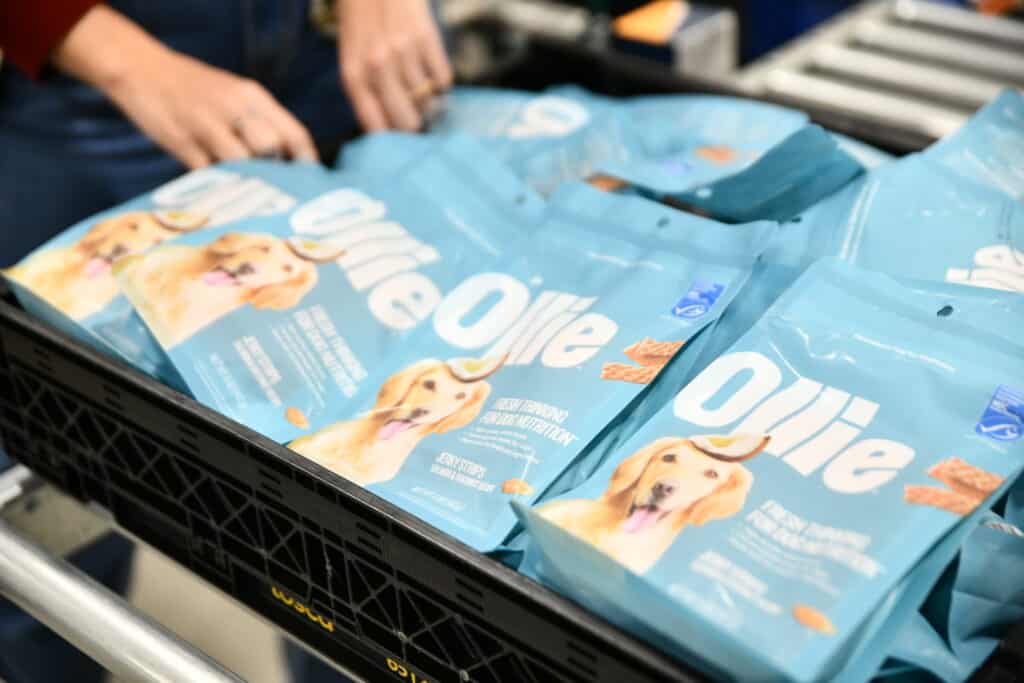
















How Ollie reduced packaging waste while scaling its pet food operations
Scaling a fast-growing food brand requires more than increasing production capacity. Every part of the supply chain from fulfillment operations...
Published by hemasanghavi, under Supply chain efficiency

In their recent study, entitled “Futureproofing the Supply Chain”, McKinsey pointed out that the entire mentality behind the balance of supply chains has changed. The traditional supply chain objectives of cost efficiency, service, and quality must now be managed with goals for resilience, agility, and sustainability.
Over the past five years, supply chains have transformed from cost-optimization engines into risk-management systems. Pandemics, geopolitical conflict, tariff volatility, climate disruption, and labor shortages have permanently altered how food businesses operate. What was once episodic disruption is now structural uncertainty.
According to PwC’s 2025 Digital Trends in Operations Survey, 91% of supply chain leaders say the U.S. trade policy changes are forcing significant adjustments, and 82% struggle to navigate short-term pressures with long-term resilience.
The question is no longer whether disruption will occur.
The question is how exposed your operating model is when it does.
In this environment, companies that outperform are not simply responding faster; they are structurally less vulnerable. That shift requires rethinking the fundamentals of supply chain design, including one often-overlooked lever: packaging infrastructure.
This article analyzes five structural shifts reshaping food supply chains and their implications for operational leaders planning beyond the next quarter.
Labor shortages remain acute. A 2024 Descartes survey found that 76% of supply chain and logistics operations report significant workforce shortages, with more than one-third describing conditions as high to extreme.
These shortages have helped accelerate automation and AI adoption in the supply chain. ABI Research’s 2025 Supply Chain Survey reports that 64% of supply chain leaders now consider AI and Gen AI essential when evaluating new technology investments. Meanwhile, 94% plan to use AI to support decision-making processes.
The investment is showing up in equipment, too. The Association for Advancing Automation reported that robot orders in the food and consumer goods sector surged 85.6% in the first half of 2024. The operational stock of industrial robots in food and beverage now exceeds 135,000 units globally.

According to McKinsey’s 2024 survey of distributor operations, embedding AI in operations creates significant value: 20–30% reductions in inventory, 5–20% lower logistics costs, and 5–15% savings in procurement spend.
Practically speaking, that can mean fewer stockouts and overstock situations from better demand prediction, lower transportation costs, and a more agile response to supply chain disruptions.
It’s the companies that combine automation with workforce development—not replacement—that are seeing the strongest results. Automation handles repetitive tasks while trained workers focus on problem-solving and exceptions.
While the FDA’s FSMA Section 204 was big news in 2024, 2025 saw a shift in expectations as the compliance deadline was extended to July 2028.
While this takes some regulatory pressure off the table,the business case for traceability hasn’t changed.
Recalls remain costly and common. There were more than 1,900 food recalls in fiscal year 2024 alone, and a single event can cost companies millions in direct expenses, and that’s before factoring in brand damage and lost sales. It’s an expensive, disruptive, and avoidable situation.
Beyond recall logistics, consumer expectations have shifted. Shoppers increasingly want to know where their food comes from and how it was handled. Transparency has become an important competitive differentiator.
IoT-enabled tracking and connected systems make granular traceability possible. These tools capture real-time data on location, temperature, humidity, and handling history, which allows companies to trace products back to their source in minutes rather than days.

The extended FSMA timeline gives companies room to build traceability systems that deliver value, not just compliance. The data collected for regulatory purposes can also improve demand planning, reduce spoilage, and strengthen supplier relationships.
In practice, that can mean:
Traceability technology can reduce the scope of a recall by 50–95%, according to the International Trade Centre. That precision protects both margins and reputation.
Tariffs have emerged as a significant cost driver for food supply chains. In April 2025, the U.S. implemented a 10% universal tariff, plus country-specific reciprocal rates: 34% on China, 20% on the EU, and varying rates on dozens of other countries. While most food from Canada and Mexico remains exempt under USMCA, food costs overall are rising.
The Yale Budget Lab estimates that tariffs will raise food costs by 3.4% in the short term, with fresh produce initially jumping by 6.9%. Seafood is particularly vulnerable to tariffs, as 70–80% of U.S. seafood is imported, much of it from Asian countries facing the highest tariff rates.
Packaging materials are getting hit, too. Steel and aluminum face 25% tariffs regardless of origin, and plastic imported from China carries a 34% rate. For companies relying on canned goods, aluminum packaging, or imported plastic containers, those costs add up fast.
But most of those costs haven’t reached grocery shelves yet. Through 2025, businesses absorbed roughly 80% of tariff-related costs rather than passing them to consumers, but that buffer is running out.

Tariff policy remains fluid; throughout 2025, exemptions were granted, rescinded, and adjusted. That uncertainty makes planning difficult. But a few principles remain consistent, regardless of where rates land. To start, companies that rely on imported packaging materials add additional tariff risks. For goods themselves, businesses must consider reusable packaging strategies to maintain flexibility amid fluctuating trade relationships.
The full consumer impact of 2025’s tariffs is yet to be seen. Analysts estimate a 12–18 month lag before tariff costs fully flow through supply chains, putting mid-to-late 2026 as the inflection point. Companies planning around current shelf prices may be underestimating what’s ahead.
While tariffs stress the food supply chain, so do ongoing climate events, geopolitical tensions, and material cost inflation.
Climate-related disruptions are affecting harvests and creating supply shortages for time-sensitive crops. Extreme weather events are becoming more frequent, and many growers lack the temperature-controlled infrastructure to buffer against them.
While volatility in material costs doesn’t make the headlines the way the above items do, these costs have also been volatile for years. Containerboard producers hiked prices $60–70 per ton in early 2025, and paper packaging costs are projected to rise 7% through 2026. Between 2020 and 2025, the Producer Price Index for cardboard rose 17.6%.

Food industry businesses can’t control the weather, tariffs, or geopolitical developments. But they can control how much of their cost structure is exposed to it. Reusable packaging isn’t tied to the costs of steel, aluminum, or paper, which means fewer line items on your P&L that spike when the next tariff hits.
Companies that rely on corrugated and wooden pallets in their secondary packaging add an extra layer of unpredictability to their operations. Those using reusable packaging systems faced far less exposure to raw-material volatility and avoided tariff risk on imported packaging inputs.
Eighty-five percent of consumers report experiencing the disruptive effects of climate change firsthand. They’re responding by prioritizing sustainable products; some consumers are willing to pay 9.7% more, on average, for sustainably produced goods, even amid inflation concerns. And 49% of Americans purchased an environmentally friendly product in the last month, as of March 2025—up from 43% in August 2024.
On the regulatory side, sustainability is showing up in new ways. SEC now requires stronger ESG reporting to investors, and major retailers are evaluating suppliers based on sustainability credentials.
Another shift in sustainability has also been the proliferation of Extended Producer Responsibility (EPR) laws, which are turning single-use packaging into a financial liability. As of late 2025, seven states have enacted EPR packaging laws that move the cost of waste management from municipalities to producers.

For operations leaders, sustainability is a compliance cost, a procurement consideration, and in some cases, a prerequisite for maintaining retailer relationships. Packaging decisions now influence regulatory exposure, ESG reporting, and shelf access.
Reusable packaging systems reduce EPR obligations by keeping materials in circulation. That means lower regulatory exposure and avoiding additional operational costs.
The next four years will not reward reactive operators. They will reward leaders who reengineer their systems to absorb volatility rather than respond to it. The forces reshaping supply chains are unlikely to ease. But they can decide whether their systems amplify disruption or absorb it.
By 2030, that distinction will define the winners.
Contact a Tosca supply chain expert to see where packaging improvements can protect your margins, reduce your risk, and give you the operational control you need in an uncertain environment.
Published on February 17, 2026
Updated on February 17, 2026